Fermented Bok Choy
Kimchi's quieter cousin. Lacto-fermented Brassica rapa with ginger, garlic, and chili — ready in 5–7 days and backed by the same microbiology that made kimchi famous.
Chad Waldman
Analytical Chemist · April 15, 2026
Prep
20 min
Ferment
5–7 days
Total
5–7 days
Servings
1 quart
Salt
2.5% by weight
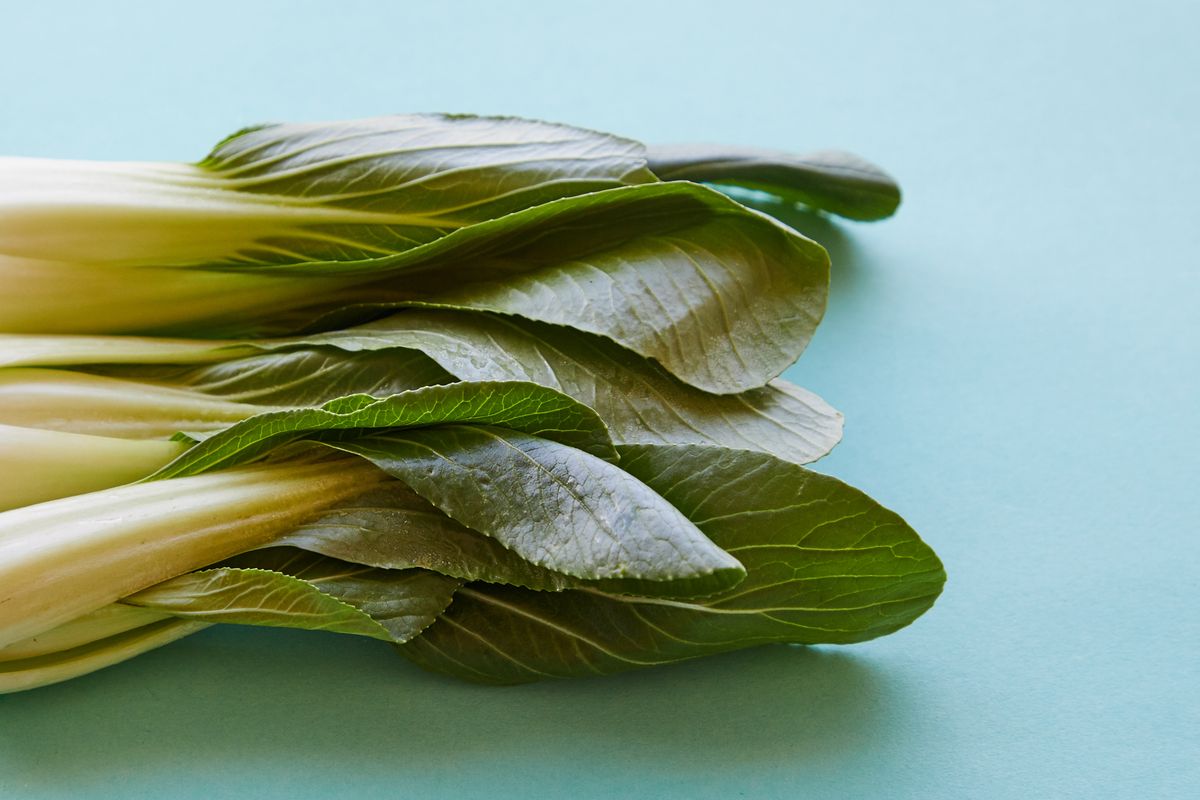
Bok choy was my gateway into Asian-style ferments. Not kimchi — that came later, with its gochugaru paste and ten-ingredient prep. Bok choy is simpler. You dry-brine it, add aromatics, pack it in a jar, and let Lactobacillus do the rest. I made my first batch in a rented apartment in Chicago, fermenting on the counter next to the radiator because I didn't own a thermometer yet. It came out sharp, spicy, slightly funky, and inexplicably addictive. I've been making it since.
Scientifically, bok choy (Brassica rapa subsp. chinensis) ferments via the same lactic acid succession as sauerkraut and kimchi. Leuconostoc mesenteroides initiates fermentation in the first 24–48 hours, dropping pH and producing CO₂. As conditions acidify, Lactobacillus plantarum takes over and drives the pH to 3.6–4.0. A 2020 study in LWT — Food Science and Technology (PMID: 32473848) found that Brassica ferments dominated by L. plantarum showed significantly enhanced glucosinolate hydrolysis, releasing isothiocyanates and indoles with established anti-inflammatory activity.
The calcium story is also worth noting. Bok choy is one of the highest-calcium vegetables by weight — around 105 mg per 100g raw. A 2019 study (PMID: 31540545) demonstrated that fermentation with L. plantarum increases calcium bioavailability through acidification and the breakdown of oxalates and phytates that normally bind calcium in the gut. You're not just preserving bok choy. You're making its nutrients more accessible.
I use 2.5% salt by weight — slightly above the 2% floor for safety, below the 3% threshold where fermentation starts to slow noticeably. Ginger and garlic add antimicrobial compounds that help select for beneficial lactobacillus. A pinch of chili brings heat and a small amount of sugar that accelerates the early fermentation stage. This isn't kimchi. But it's kimchi-adjacent, and it's considerably easier.
Lab Session
Fermented Bok Choy — Full Process
Instructions
 1
1Wash and chop bok choy
Separate the bok choy stalks from the base. Rinse each leaf under cold water — bok choy collects grit between stalks, especially near the base. Shake dry. Cut stalks and leaves into roughly 2-inch pieces. Weigh the trimmed bok choy and record the weight. You'll need it to calculate salt percentage precisely. Baby bok choy can be halved or quartered lengthwise instead of cross-cut.
Chemist’s note
Don't skip the weigh step. 2.5% of 400g is 10g of salt. 2.5% of 600g is 15g. These numbers matter. A tablespoon of salt weighs different amounts depending on crystal size. Your scale does not lie.
 2
2Salt and massage (dry brine)
Add the measured salt to your bok choy in a large bowl. Toss to coat, then begin massaging with clean hands. Work the salt into the stalks — they're thicker and need more attention than the leaves. After 5–8 minutes of firm massage, the bok choy will visibly wilt and release liquid. Let it rest for 30–45 minutes. The dry brine draws water out of the cells via osmosis, creating a natural brine that will submerge the ferment. Taste — it should be pleasantly salty but not aggressive.
Chemist’s note
The stalk-to-leaf ratio in bok choy is higher than in cabbage. The stalks need longer massage to soften and release liquid. If they feel rigid after 5 minutes, keep going. You're breaking down cell walls, not just coating the surface.
 3
3Add ginger, garlic, and chili
Add the sliced ginger, garlic, chili flakes, sugar, and fish sauce (if using) to the wilted bok choy. Toss thoroughly until aromatics are evenly distributed. The garlic and ginger introduce allicin and gingerols — antimicrobial compounds that help select against undesirable microorganisms while allowing Lactobacillus to thrive. The sugar (sucrose) is converted by early-stage bacteria into glucose and fructose, accelerating the initial pH drop that protects the ferment.
Chemist’s note
Gochugaru instead of standard chili flakes changes the flavor profile significantly — smokier, less sharp. I use standard Aleppo or Korean chili for a middle ground. Whatever you use, the heat level in fermented bok choy mutes slightly over time as capsaicin distributes through the brine.
 4
4Pack jar and submerge
Transfer the bok choy mixture into a clean wide-mouth quart jar, packing firmly as you go. Press down between additions with your fist or a tamper. The released liquid should rise above the vegetables as you pack. If it doesn't reach the top of the solids, add a small splash of 2% brine (2g salt per 100ml water). Place a glass weight or zip-lock bag filled with brine on top to keep everything submerged. Leave 1 inch of headspace. Seal loosely or use an airlock lid.
Chemist’s note
Anaerobic conditions are non-negotiable. Any bok choy above the brine line will develop mold or kahm yeast within 48 hours. If you're using a regular lid rather than an airlock, burp the jar daily for the first 3–4 days — CO₂ production is significant.
 5
5Ferment at room temperature, then store
Leave the jar at room temperature — ideally 65–75°F. Taste starting on day 3. You're looking for sour tang, softened texture with residual crunch in the stalks, and a clean, slightly effervescent quality. pH should be 3.6–4.0 at completion. Once fermented to your taste, move to the refrigerator. The cold significantly slows fermentation. Fermented bok choy keeps refrigerated for 2–3 months and continues developing flavor.
Chemist’s note
Temperature has an outsized effect on fermentation rate. At 75°F, 5 days is usually enough. At 65°F, you may need 7–8 days. If your kitchen runs cool, taste on day 5 and go from there. Check pH with strips or a meter before refrigerating — it should be clearly below 4.6 for pathogen safety.
The Science
Brassica ferments dominated by Lactobacillus plantarum showed significantly enhanced glucosinolate hydrolysis, releasing isothiocyanates and indoles with established anti-inflammatory and anti-carcinogenic activity compared to unfermented controls.
LWT — Food Science and Technology (2020) · PMID: 32473848 (opens in new tab)→
Fermentation with L. plantarum increased calcium bioavailability from Brassica vegetables through acidification and hydrolysis of oxalates and phytates that normally complex calcium in the gut, resulting in measurably higher intestinal absorption.
Food Chemistry (2019) · PMID: 31540545 (opens in new tab)→
A 10-week randomized controlled trial found that high-fermented-food diets increased gut microbiota diversity and decreased 19 inflammatory markers including interleukin-6, compared to high-fiber diets.
Cell (2021) · PMID: 34256014 (opens in new tab)→
Lacto-fermented Brassica vegetables undergo a predictable microbial succession: Leuconostoc mesenteroides initiates fermentation in the first 48 hours before Lactobacillus plantarum dominates and drives pH to 3.2–3.8.
International Journal of Food Microbiology (2018) · PMID: 29351597 (opens in new tab)→
Fermented Bok Choy
Kimchi's quieter cousin. Lacto-fermented Brassica rapa with ginger, garlic, and chili — ready in 5–7 days and backed by the same microbiology that made kimchi famous.
20 min
Prep
5–7 days
Ferment
pH 3.6–4.0
Target
Ingredients
Equipment
- Kitchen scale (mandatory — volume measurements fail here)
- Wide-mouth quart jar with lid
- Glass weight or small zip-lock bag filled with brine
- pH meter or strips (target 3.6–4.0)
- Large mixing bowl